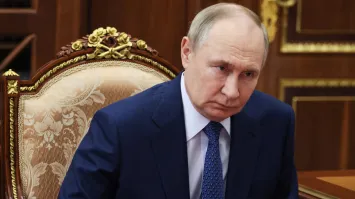
Russian President Vladimir Putin said on Monday that Moscow will continue to observe nuclear arms limits for another year after its nuclear treaty with the United States expires in February. The New START treaty is the last active arms control agreement between the two countries. Addressing Russia’s Security Council, Putin warned that ending the pact could harm global stability. He added that Russia expects Washington to do the same and respect the treaty’s limits.
What is the treaty about?
The New START treaty, signed in 2010 by the United States and Russia, is the last active arms control pact between the two nuclear powers. It came into force in February 2011 and was extended in 2021 to run until February 5, 2026. The agreement was designed to reduce and limit strategic offensive arms, ensuring predictability and stability in the nuclear relationship between Washington and Moscow.
Under its terms, both sides are restricted to no more than 1,550 deployed strategic nuclear warheads. The treaty also caps deployed intercontinental ballistic missiles, submarine-launched ballistic missiles, and nuclear-capable heavy bombers at 700, while placing a ceiling of 800 on deployed and non-deployed launchers combined. These restrictions are backed by detailed verification measures such as on-site inspections, regular data exchanges, and notifications, all of which provide transparency and build mutual confidence.

It is now currently the last remaining arms control agreement between Washington and Moscow that imposes binding numerical caps on strategic nuclear weapons and associated delivery systems. It plays a central role in maintaining strategic stability, providing predictability, and reducing risks of nuclear escalation
Challenges faced
Despite these safeguards, implementation has faced challenges. In February 2023, Russia suspended its participation in inspections and reporting, though it said it would continue to respect the numerical limits. Analysts warn that if the treaty expires in February 2026 without replacement, it will leave the world’s two largest nuclear powers without any legally binding restrictions on their arsenals for the first time in decades. Such an outcome, they argue, could increase nuclear risks, heighten mistrust, and undermine global stability.